Everyday Nature-Led Living On Bald Head Island
What if your daily routine felt less like rushing from place to place and more like moving with the tides, the light, and the seasons? That is part of what makes Bald Head Island so memorable for many buyers. If you are curious about what everyday life here really looks like, this guide will help you understand how nature shapes the pace, rhythms, and practical details of living on the island. Let’s dive in.
Bald Head Island is not a typical drive-on beach town. The Village describes it as a barrier island about three miles across the Cape Fear River from Southport, with no bridge and access that is usually by ferry. From the start, that changes how you arrive, how you move around, and how you experience the setting.
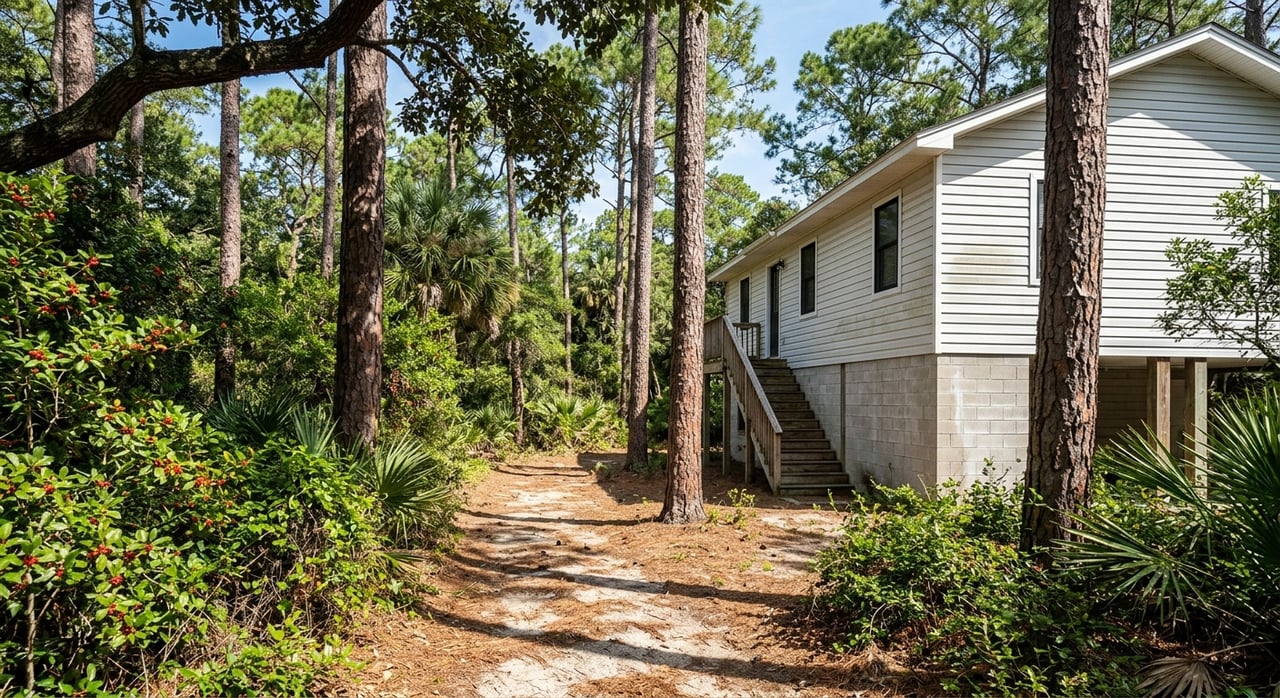
The island is shaped by four ecosystems: beachfront, dune ridge, maritime forest, and marsh. Instead of a conventional street grid setting the tone, water, dunes, and conservation rules play a major role in everyday life. That natural framework is a big part of why living here feels slower, quieter, and more connected to the landscape.
On Bald Head Island, getting there is part of the lifestyle. Because there is no bridge, most people arrive by ferry, which creates a more intentional rhythm than simply driving into a mainland community. For many homeowners, that sense of separation is part of the appeal.
Daily logistics reflect that island geography too. Inbound packages arrive by ferry and barge, and the Village states there is no express delivery to island addresses. If you are considering a full-time home or second home here, it helps to think ahead and embrace a more planned, less last-minute routine.
Once you are on the island, transportation looks different from most coastal communities. Tram service between the ferry terminal and your home is included with a general passenger ferry ticket, and many rental properties include golf carts. Gas-powered golf carts are prohibited on Village streets, which supports the island’s quieter, lower-speed atmosphere.
The island-wide speed limit is 18 mph. That one rule says a lot about daily life here. You are not racing from errand to errand. You are moving through a place where the journey itself, whether along shaded roads or near marsh views, becomes part of the experience.
Parking rules also reflect that low-speed, safety-focused environment. At public beach accesses, golf carts must be fully off the pavement and out of emergency vehicle routes. Even small details like parking reinforce that this is a community where practical habits are shaped by shared stewardship.
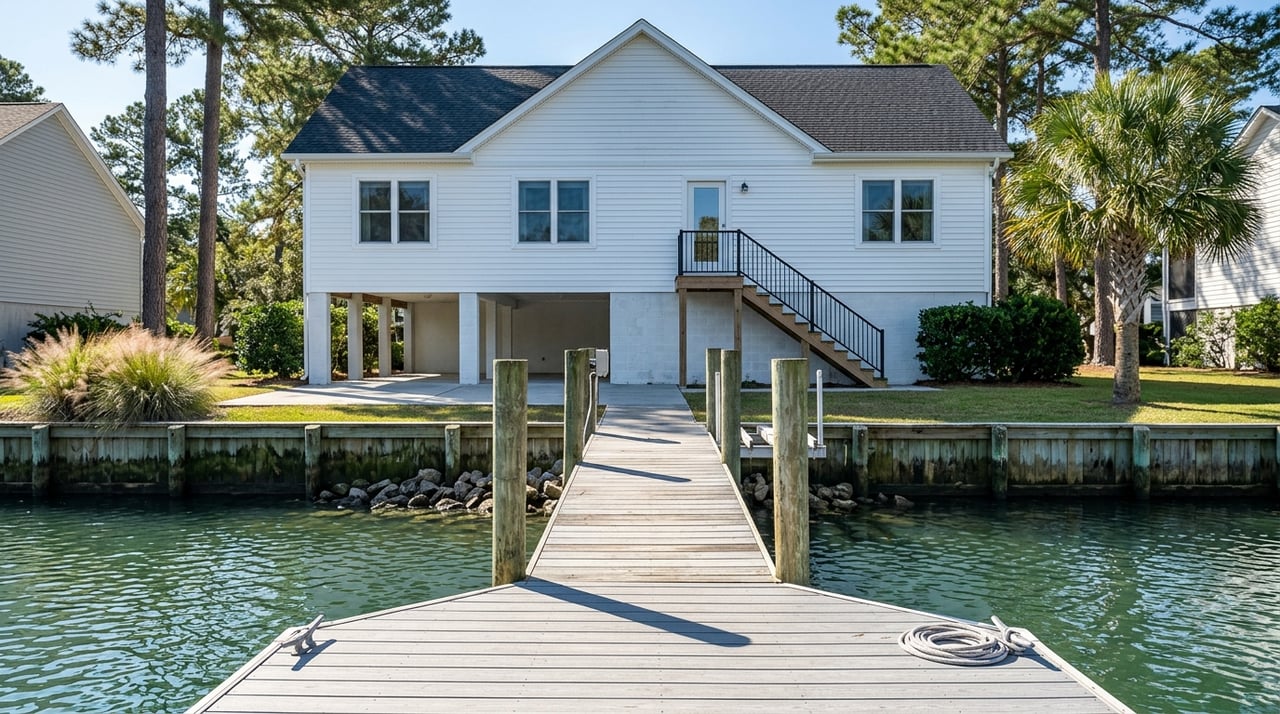
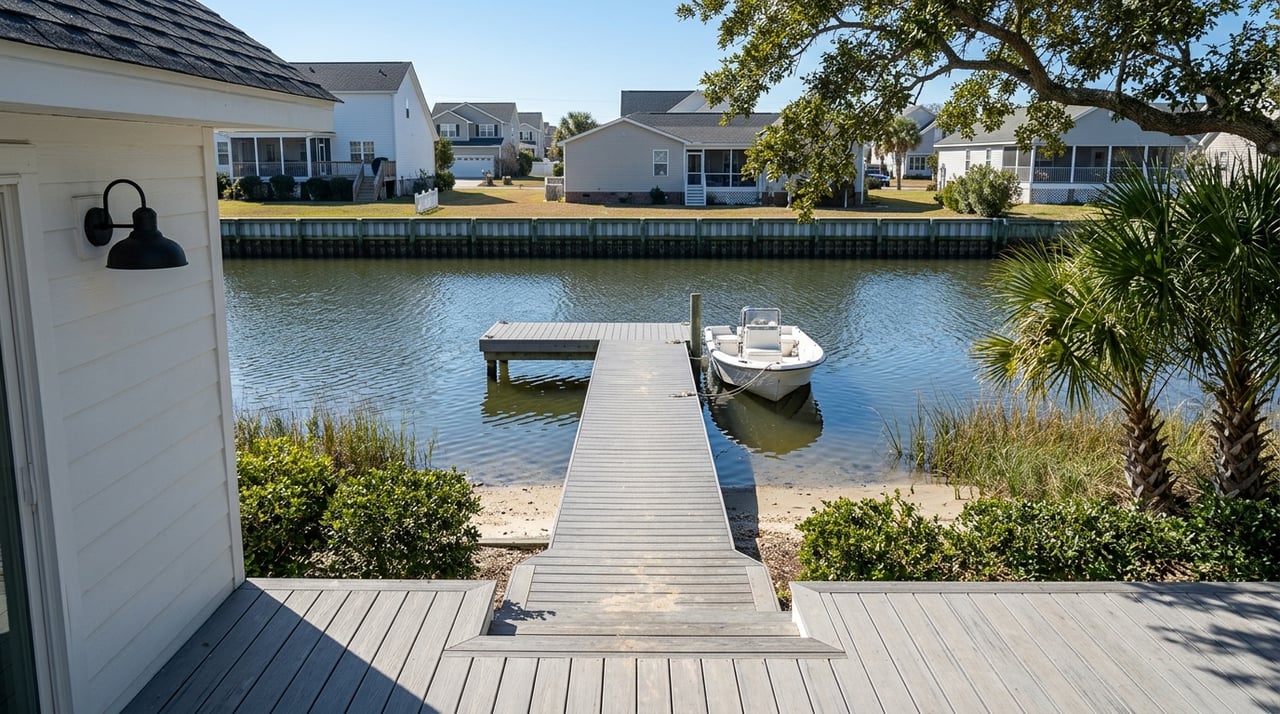
Bald Head Island sits between the Cape Fear River on the west and the Atlantic Ocean on the south and east. That means river, marsh, and ocean views are not just occasional highlights. They are woven into the backdrop of ordinary life.
For buyers, this matters because the island experience is not limited to one type of scenery. A morning might begin under a live oak canopy, lead to a marsh trail in the afternoon, and end with ocean air at sunset. That variety gives daily life a layered, nature-led feel that many people do not find in more conventional beach communities.
Living near the beach here is beautiful, but it also comes with a different level of self-reliance. The Village notes that beaches are swim-at-your-own-risk and there are no lifeguards. Residents and visitors are expected to know their street address and nearest beach access number and to treat the shoreline as an active environment.
That practical awareness becomes part of everyday living. Beach time can still be relaxed and joyful, but it is paired with a stronger sense of personal responsibility. For many homeowners, that balance is part of what makes the island feel grounded and real.
On Bald Head Island, conservation is not just a talking point. It is part of how the community functions day to day. The island’s development perspective has centered on living in harmony with nature since the Save Bald Head movement in the 1960s, and that mindset still shows up in everyday rules and routines.
The Village also treats dunes and marshes as part of flood protection and shoreline stabilization. In other words, the landscape is not only scenic. It is also essential infrastructure. That helps explain why stewardship is taken seriously here.
Sea turtle season is one of the clearest examples of nature shaping daily living. According to Bald Head Association, sea turtle season runs from May 1 through November 15. During that time, dogs must be physically restrained by leash from sunset to sunrise, white flashlights should not be used on the beach at night, and ocean-facing homes should use room-darkening window treatments and careful exterior lighting.
The Village separately states that beach illumination with artificial light is unlawful from May 1 through October 31. These are not small details. They influence how you use your home, how you enjoy the beach after dark, and how you think about lighting during the warmer months.
Sea turtle protection is also a long-running effort on the island. The Conservancy has coordinated the program since 1983, and staff conduct nightly patrols from 9 p.m. to 6 a.m. That makes conservation a visible part of summer life, not just an idea in the background.
Shorebird protection adds another seasonal rhythm. Bald Head Island Conservancy identifies the island as a Global Important Bird Area with more than 200 bird species, and nesting season runs from March 1 through August 31. During that period, some areas are roped off and monitored.
If you are considering a home here, this is helpful context. The island invites outdoor living, but it does not treat nature as something separate from daily use. Instead, recreation and conservation share the same space, and residents learn to adapt their routines accordingly.
Outdoor life on Bald Head Island is not limited to the beach. The maritime forest is one of the island’s defining features, and Bald Head Woods spans 191 acres as the second largest maritime forest in North Carolina. With live oaks, laurel oaks, and a dense understory, it also helps buffer the island against storms.
For many homeowners, that forest setting is a major quality-of-life benefit. Bald Head Island Conservancy notes that the island offers 14 miles of trails, with multiple routes in Bald Head Woods Coastal Reserve. That means a walk, ride, or quiet nature break can be part of your normal day, not something you save for vacation.
The M. Kent Mitchell Nature Trail is a good example of this lifestyle. It offers nearly 360-degree marsh views and flora markers, blending scenery, exercise, and observation into one outing. That kind of easy access to nature is one reason the island feels immersive rather than simply picturesque.
Life here often centers on active, outdoor routines. The Conservancy highlights kayaking through salt marshes and tidal creeks, birding tours, nature walks, and sunset beach views as regular ways to experience the island. These activities are not separate from daily life. They are woven into it.
Programs like Island Nature Tour, BHI Birding, and Bald Head Island After Dark also show how leisure on the island often includes ecological interpretation. If you are drawn to a coastal lifestyle with depth and variety, that can be a meaningful difference. You are not only near nature. You are living alongside it in a more informed way.
If you are thinking about buying on Bald Head Island, it helps to view the decision through a lifestyle lens as much as a property lens. The island offers a rare combination of ferry access, golf-cart transportation, low-speed roads, maritime forest, marshes, beaches, and active wildlife protections. Together, those features create a living experience that feels distinct from many other Brunswick County coastal communities.
That difference can be a strong fit if you want a home in a place that feels self-contained, scenic, and intentionally paced. It also means you should be ready for the practical side of island living, from scheduled travel habits to seasonal lighting and wildlife rules. The right home here is often the one that matches not only your budget and wish list, but also the rhythm of life you want to live.
Whether you are exploring a second home, a future retirement move, or a lifestyle change on the North Carolina coast, local guidance matters. If you want help understanding how Bald Head Island living fits your goals, April Annas can help you explore the island with a clear, personal, and informed approach.
Island Life Real Estate is invested and committed to helping each of its clients find their dream and discover all island life has to offer.